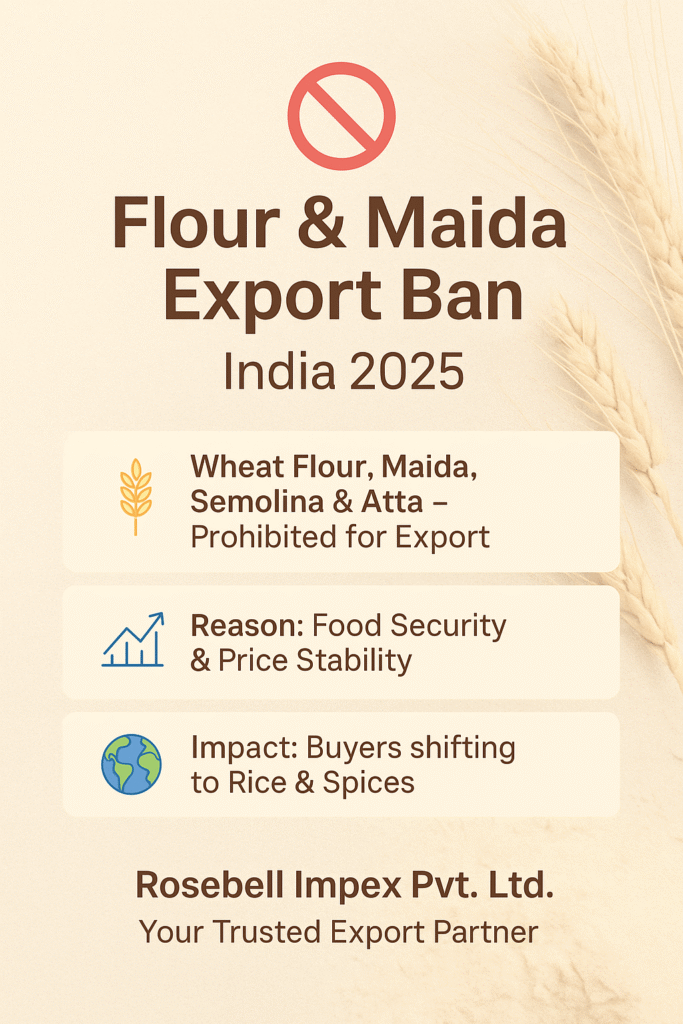


Status of India’s Flour & Maida Export Ban 2025 | Rosebell Impex Pvt Ltd
Status of India’s Flour & Maida Export Ban (2025): What Buyers Need to Know
Introduction
In recent years, India has taken strong policy measures to ensure food security and price stability within the domestic market. One of the most significant has been the ban on the export of wheat flour, maida, semolina, and atta, which continues to affect global buyers in 2025.
At Rosebell Impex Pvt Ltd, we believe in transparency and long-term partnerships. This blog explains the current status of the ban, its impact on international buyers, and how we are preparing to support you once restrictions are eased.
Why Did India Ban Flour & Maida Exports?
The Government of India, through the Directorate General of Foreign Trade (DGFT), shifted the export policy of wheat flour and related products from “Free” to “Prohibited.”
The key reasons include:
- Domestic Food Security: Ensuring steady supply for the Indian population.
- Price Stabilization: Preventing inflation in essential food items.
- Wheat Production Challenges: Weather-related shortfalls and procurement priorities.
What Exactly Is Banned?
As of 2025, the following items fall under prohibited export:
- Wheat flour
- Maida (refined flour)
- Semolina (suji)
- Wholemeal atta
Any international shipments of these products are not legally permitted unless under special government exemption.
How Long Will the Ban Last?
The Government has not announced a fixed timeline. However, industry experts and trade associations are watching for signals such as:
- Improved wheat harvests in coming seasons
- Stable domestic prices for flour and bread
- Government stock levels reaching comfort zones
If these conditions improve, the government may relax the ban partially or fully.
Impact on Global Buyers
The ban has:
- Reduced availability of Indian flour and maida in international markets.
- Pushed global buyers to explore alternatives in Turkey, Kazakhstan, and the Middle East.
- Increased reliance on Indian rice, spices, and other food products which remain export-friendly.
How Rosebell Impex Supports Buyers During This Period
At Rosebell Impex Pvt Ltd, we are committed to supporting buyers even during policy restrictions:
- Alternative Products: Offering high-quality rice, spices, and other export-approved goods.
- Policy Monitoring: Regularly tracking DGFT notifications to update buyers instantly.
- Future-Ready Planning: Preparing compliance, documentation, and logistics so we can move quickly once the ban lifts.
- Advisory Role: Guiding buyers about market shifts, substitute products, and sourcing strategies.
What Buyers Can Do Now
- Stay Informed: Subscribe to trade updates and government notifications.
- Diversify Imports: Explore Indian products like rice, pulses, and spices.
- Stay Connected with Exporters: Build relationships with trusted companies like Rosebell Impex who can guide you when the ban is lifted.
Conclusion
The export ban on flour and maida from India remains in place as of 2025, but this is not the end of opportunities. With strong agricultural capacity, India will continue to be a global food supplier, and restrictions may ease in the future.
At Rosebell Impex Pvt Ltd, our promise is simple:
Keep you informed, supply you with what’s legally available, and be fully prepared for the day when flour and maida exports resume.
Stay connected with us today and be the first to know when export permissions open up again.